October 2025
Ruth’s new paper ist out in the Journal of Comparative Neurology. We show using immunohistochemistry that in the dorsal telencephalon (Dx) of gobiiform fishes, subregions are characterized by their own individual neurochemical profile. This shows that they receive differential inputs into different subregions. What do these fishes make of it remains an open question!
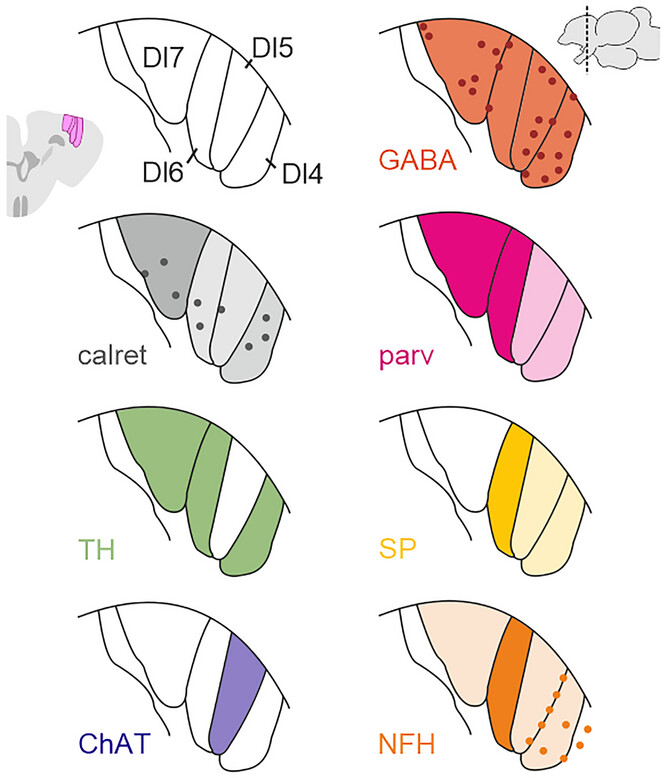
Check out the paper at: http://dx.doi.org/10.1002/cne.70097
August 2015
New paper from Daniel: Here we show how behavioral preference in synodontid catfishes changes across some selected species if presented with different stimulus modalities. We try to find if these changes are linked to changes in neural organization, especially in sensory wiring and calcium binding expression in a major sensory hub, the torus semicircularis. Iva contributed to this paper in her bachelor thesis, Giulia during her Master thesis!
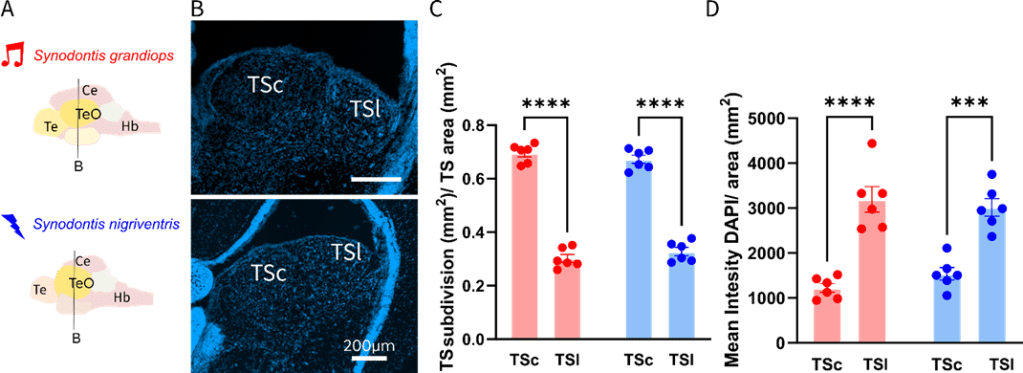
Check out the paper at: https://doi.org/10.3389/fnana.2025.1589687
Juli 2025
New paper form Ruth: In this paper we show that Dx, an unusual brain area in the forebrain of gobiiform fishes receives intratelencephalic input from different nuclei and extratelencephalic input exclusively from the PG. It is still unclear what Dx does!
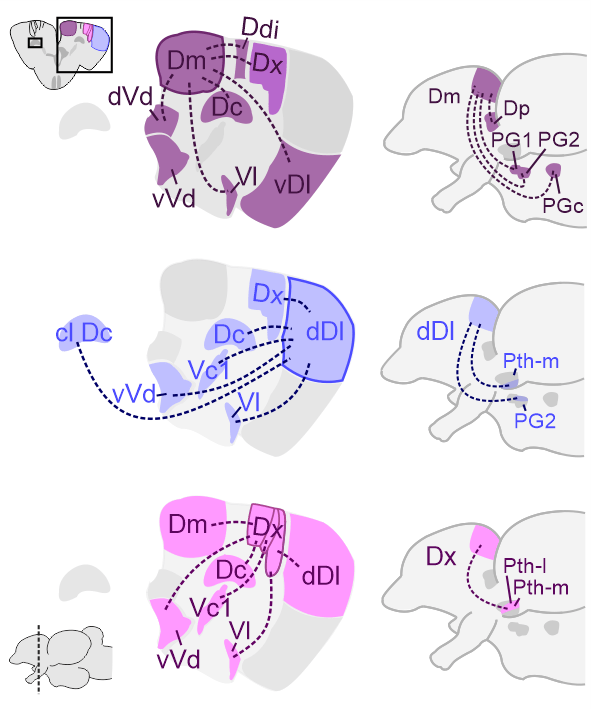
Check out the paper at https://doi.org/10.1002/cne.70064
December 2024
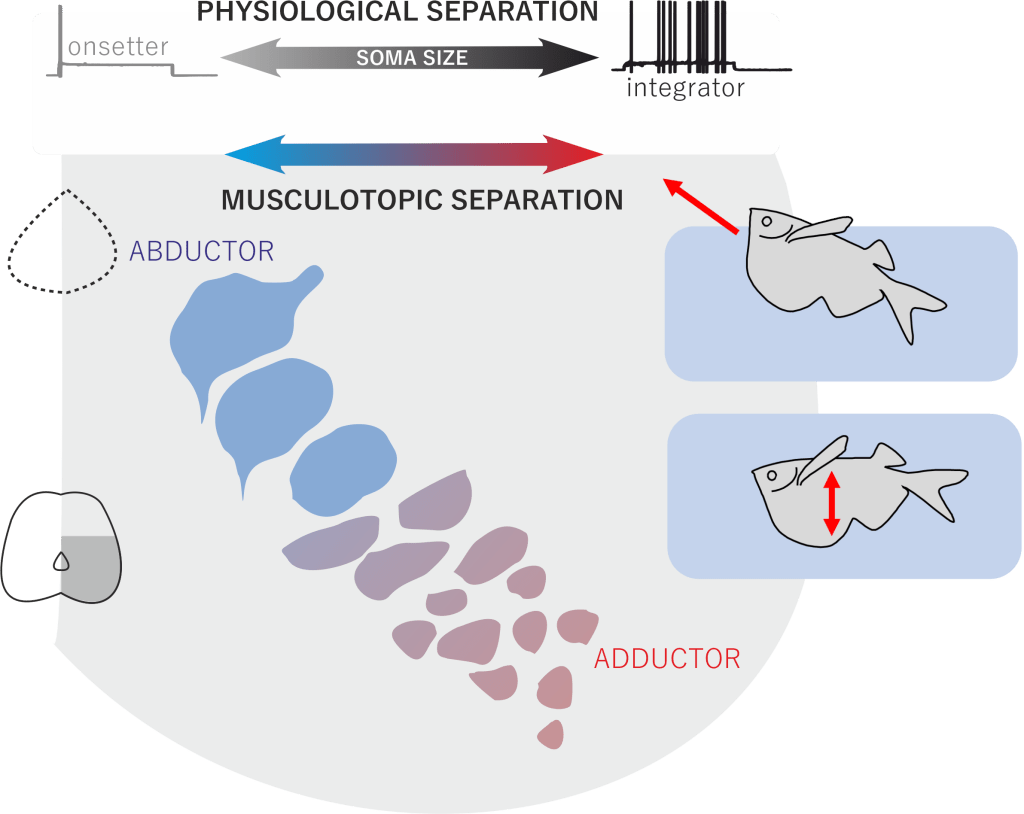
Want to know a little more about the organization of pectoral motor neurons in the spinal cord of hatchet fish? Check out our latest publication in PNAS!
📰 Read the full publication here: Link
February 2024
We are happy to announce that our new project using drones to fight off bugs made an appearance in the local TV-magazine („Steiermark heute“) of the ORF.
🎬 Watch the small video feature here (German version only): https://tvthek.orf.at/profile/Steiermark-heute/70020/Steiermark-heute-vom-22-02-2024/14214892/Forscher-setzen-Drohnen-gegen-Wanzen-ein/15581450
January 2024
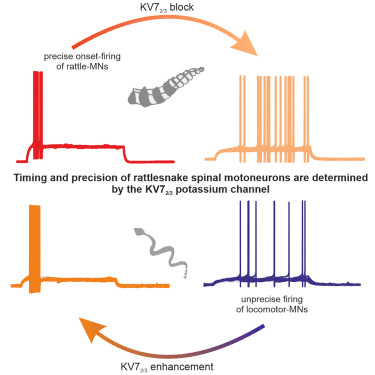
We are happy to announce our latest publication in Current Biology. Check out the paper to find out about how motor neurons in the spinal cord of rattlesnakes are differentially tuned to transmit motor rhythms in vastly different time domains for locomotion and rattling, respectively.
📰 Read the full publication here: Link
Winter 2023
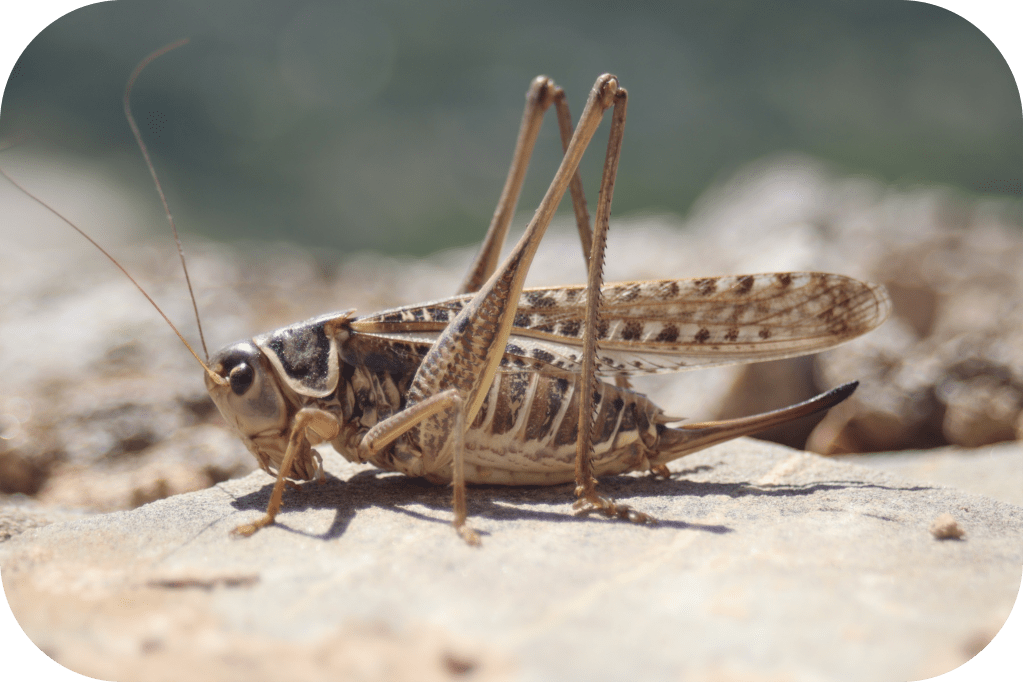
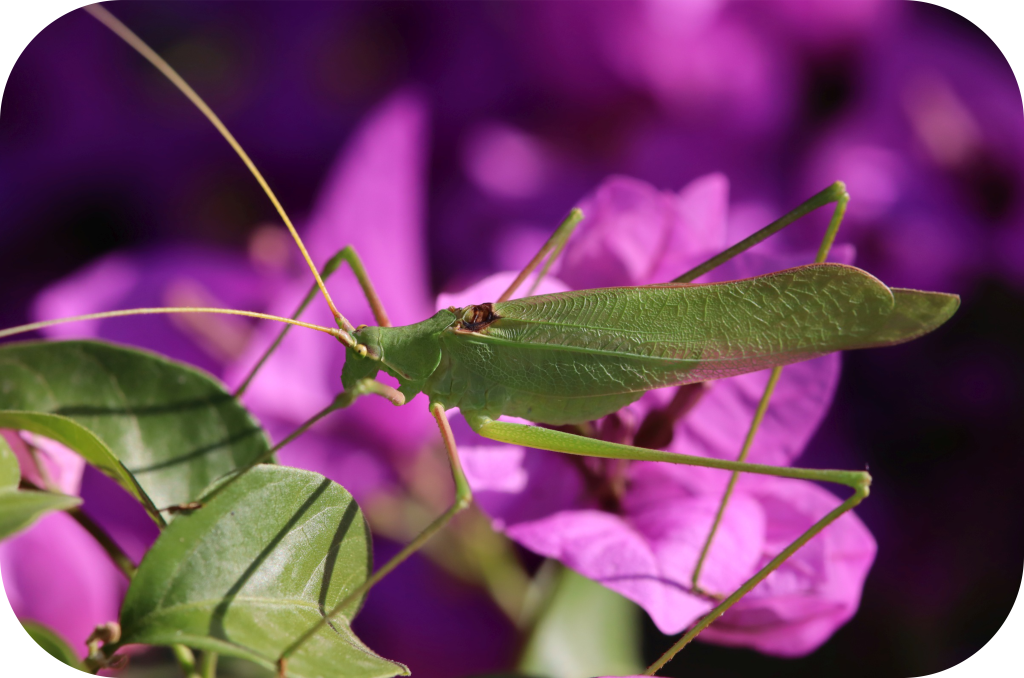
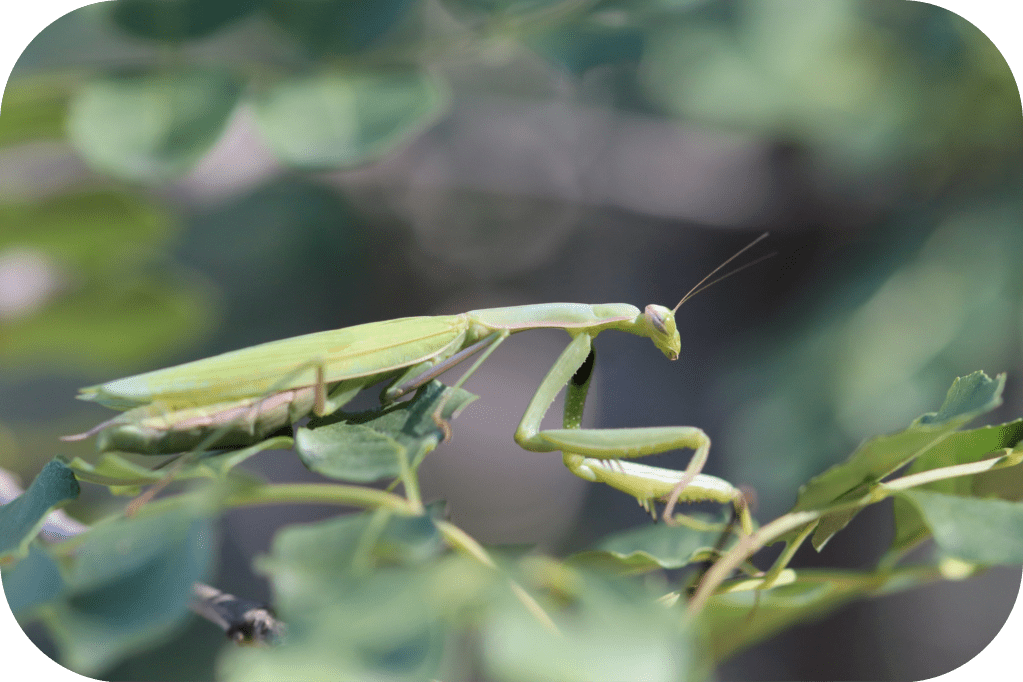
Check out some of the most amazing snapshots taken by Thorin in 2023! 📷
October 2023
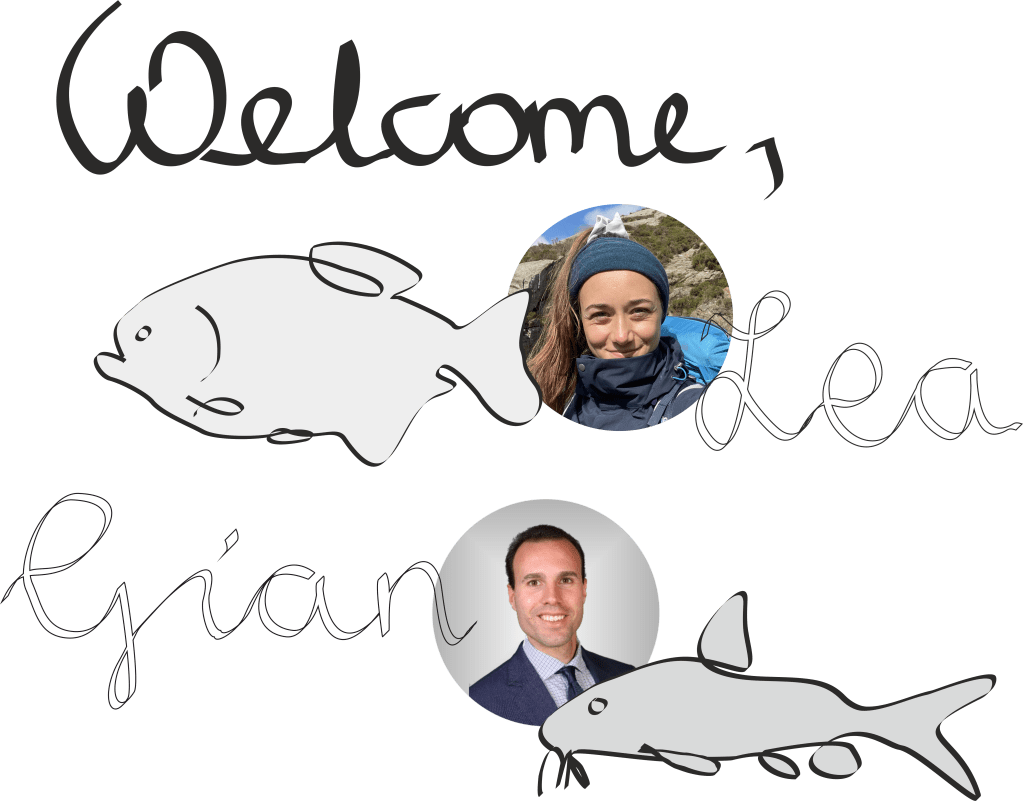
A very warm welcome to our new PhD candidates Lea and Gianmarco! Lea will work on the neuronal basis of sound production in piranhas and Gianmarco is performing his research on synaptic transmission in catfish jointly with the mathematical institute! Glad to have you two on board 🙂
July 2023

Daniel has attended the Cognition and Evolution (CogEvo 2023) workshop in Rovereto – Italy and successfully presented a poster: Are changes in communication modality leading to variations in brain structure? In this poster, we present a current study trying to investigate whether transitioning to an electric communication modality in Synodontis nigriventris was accompanied by volumetric or neurochemical variations in some brain areas of the electrosensory circuit in comparison to the non-electrocommunicating Synodontis grandiops.
📜 Interested? Find our poster here: POSTERS
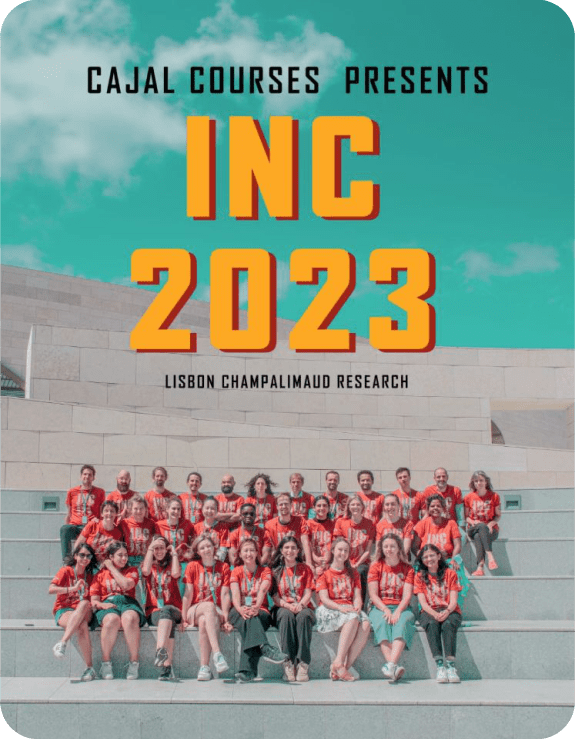
Ruth has received the opportunity to participate in the Cajal summer school “Interacting with neural circuits” held at the Champalimaud center for the unknown in Lisbon this summer. For three weeks, she could get a unique insight into 2-photon optogenetic stimulation and calcium imaging, as well as neuropixel recordings. She has met, exchanged knowledge and shared passions with many different scientists from all over the world and has brought back a lot of new skills and energy. Thank you to the Cajal course directors and everyone else for making this experience such an exceptional one!
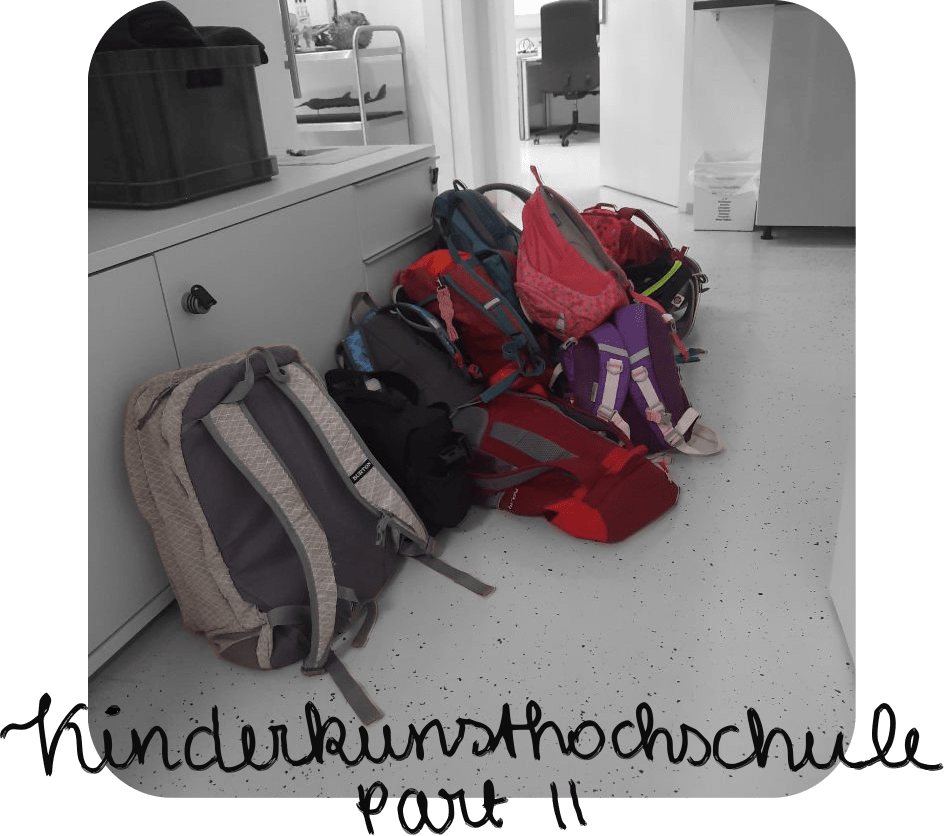
Yesterday, we had a second group of kinder.kunsthochschule (https://www.kinder.kunsthochschule.at/) visit our lab, learn about sounds, vocalizing fish and humans and of course looking at our colorful fish. What a fun and lively visit!
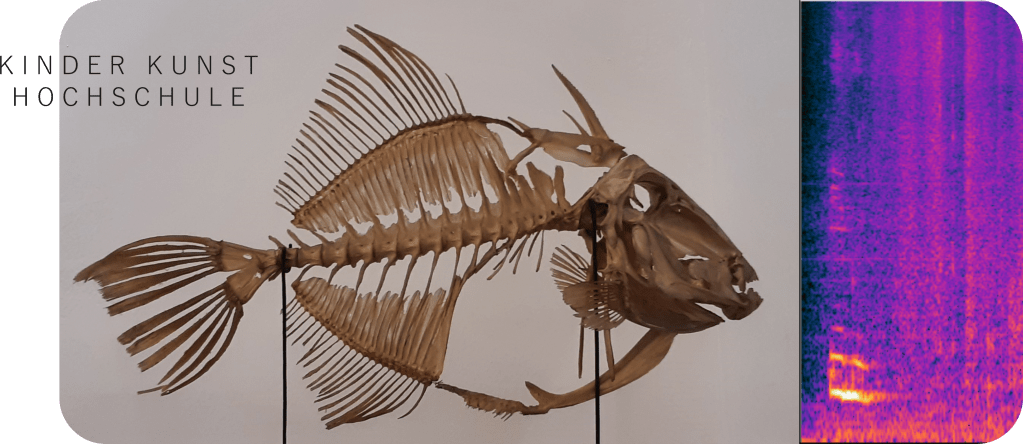
Today we had a visit from 20 bright kids of the kinder.kunsthochschule (https://www.kinder.kunsthochschule.at/) to chat about vocal behavior in fishes, to listen to fish sounds and learn about spectrograms. A special shoutout to Emil for lending us his voice. Thank you for the visit!
May 2023
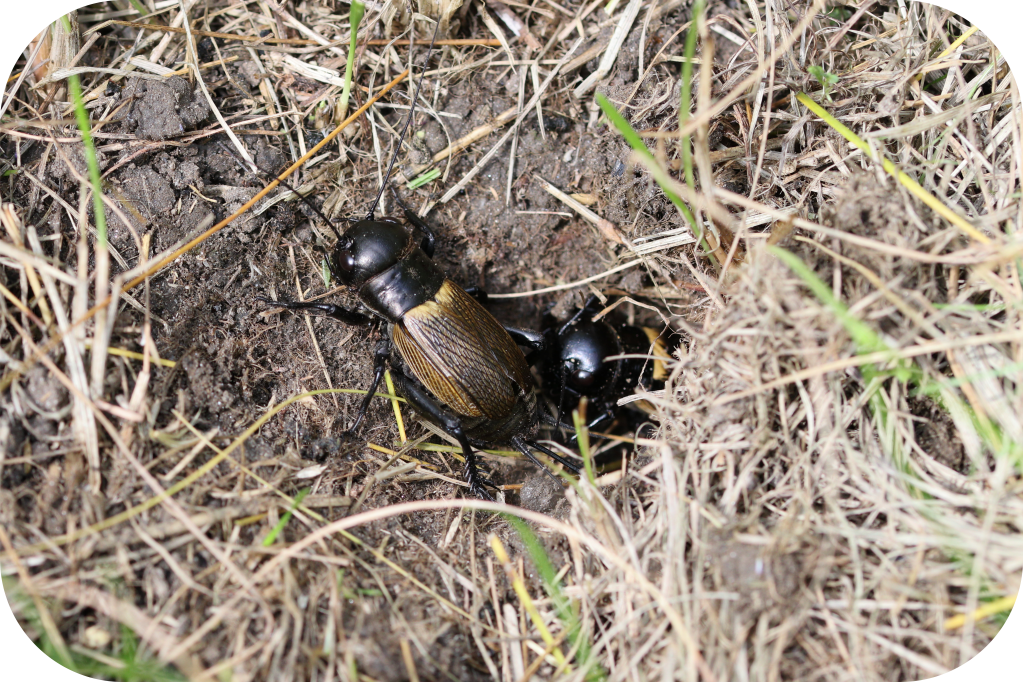
Take a small peek at the work currently done in the lab: Here is a clip of the tracked motion of cricket (Gryllus bimaculatus) wings during a rivalry song. The video was acquired at 1000 fps and slowed down to 3% speed. Up to 20 points were automatically tracked with a trained convoluted neural network (CNN). Labelling and training was done using DeepLabCut 2.3.4.
___________________________________________________________________________________
February 2023
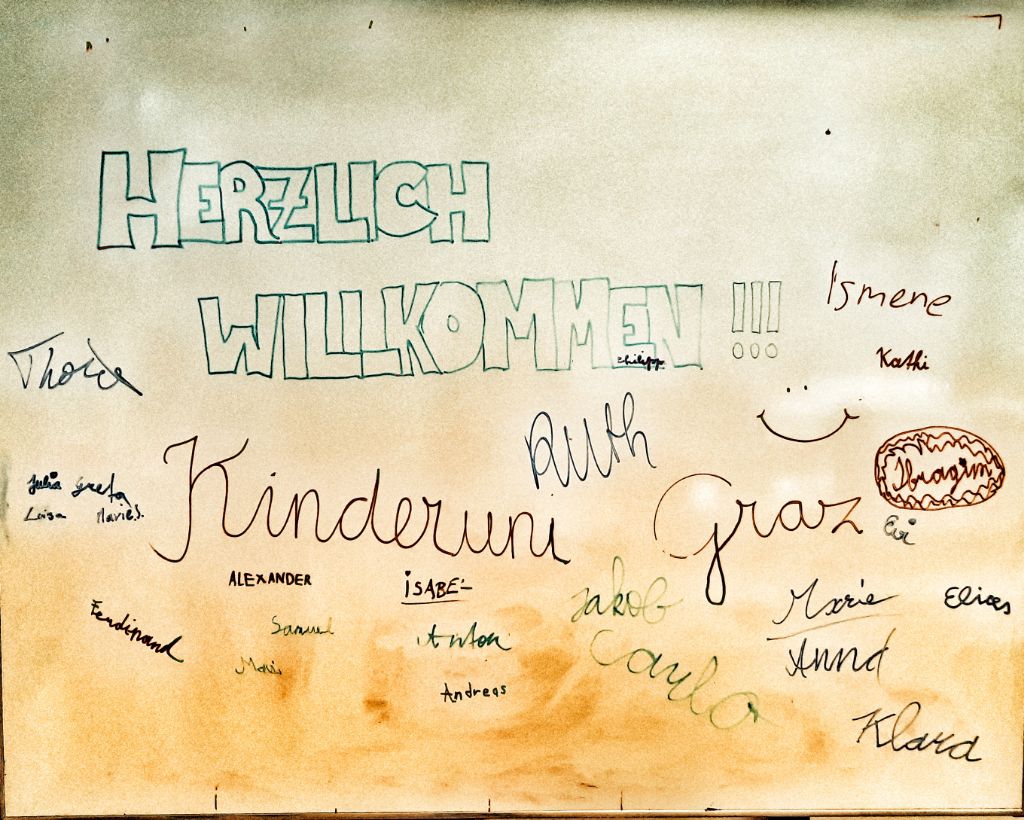
Today, twenty mini-scientists from a school in Graz came to visit our lab during the program „Kinderuni“, where children can have a first peak at what the University of Graz is working on. During the two hours, we explored how our muscels generate force, and how to use this force to control a plastic prosthetic and even other limbs! Of course, we also took a small glimpse at our amazing fish facilities! 🔬🧠🐟
___________________________________________________________________________________

We are incredibly happy to give a warm welcome to our newest lab-member, Harald. Harald has become our new workshop manager, but he is so much more than that. His invaluable contributions to the lab have already made a huge impact on our daily work and will continue to do so in the future. His innovative and creative mind and seemingly endless technical abilities will without doubt push the boundaries of our research!
„It is my goal to support the research and development of the lab with my innovative technichal solutions.“
Harald Pascher – workshop manager
___________________________________________________________________________________
September 2022
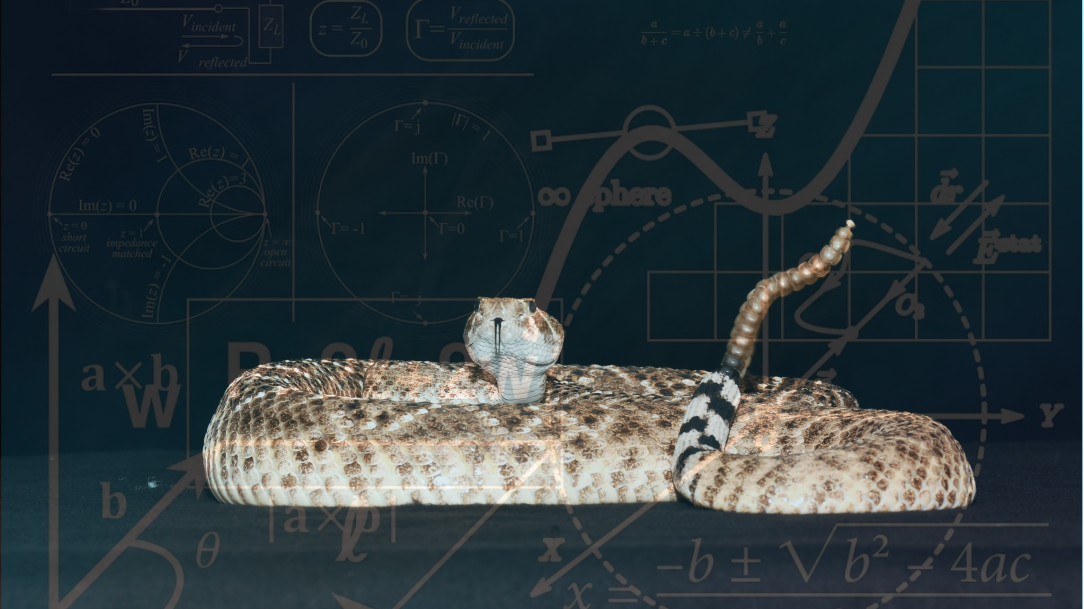
The rattlesnake strikes again! Last year’s paper published in Current Biology once again sparked interest in the science world. Since computational analysis was done using MATLAB, the snakes were additionally featured in an article by MathWorks. Take a look!
📄Find the complete article here: https://de.mathworks.com/company/mathworks-stories/vr-decodes-rattlesnakes-auditory-communication.html
📄Find the original paper here: https://doi.org/10.1016/j.cub.2021.07.018
___________________________________________________________________________________
We welcome PhD candidate Jan Wille to our lab team! Jan will be joining PI Thorin Jonsson in a fascinating project, investigating Orthopteran wings and bioacoustics. We are very happy to have Jan join our team and wish him all the best for this exciting time!

___________________________________________________________________________________
July 2022
We are incredibly happy to announce the latest member of our lab – our new microscope🔬! The past few days have been swamped with a lot of exploring and imaging and we are super excited!
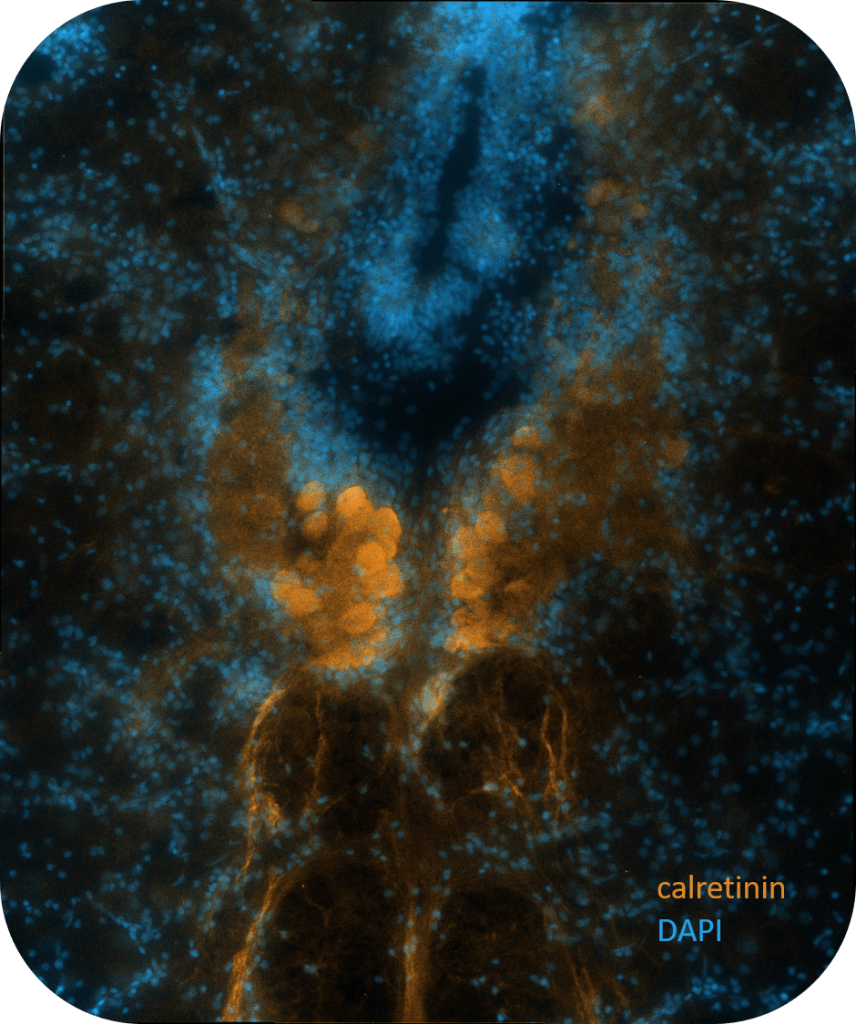
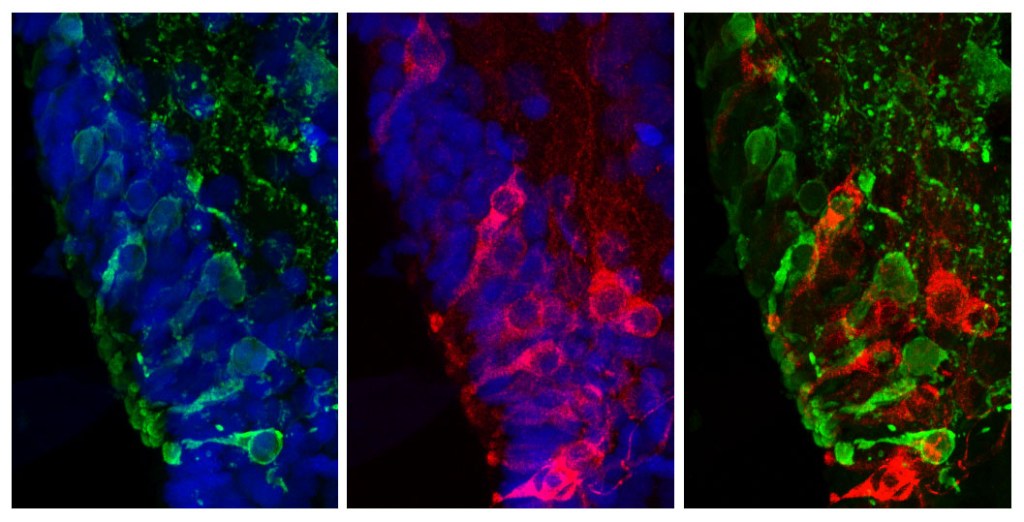
Here, have a look at a beautiful staining by our PhD candidate Daniel, showing calretinin-immunoreactive neurons in Synodontis grandiops.
___________________________________________________________________________________
June 2022
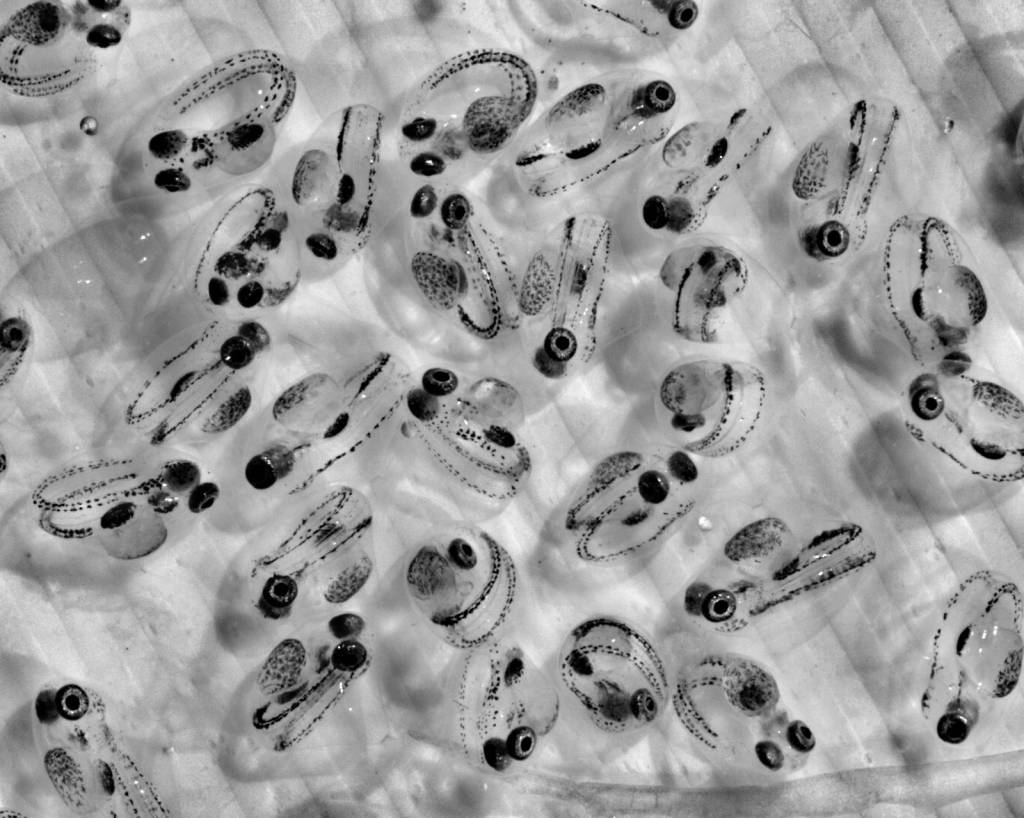
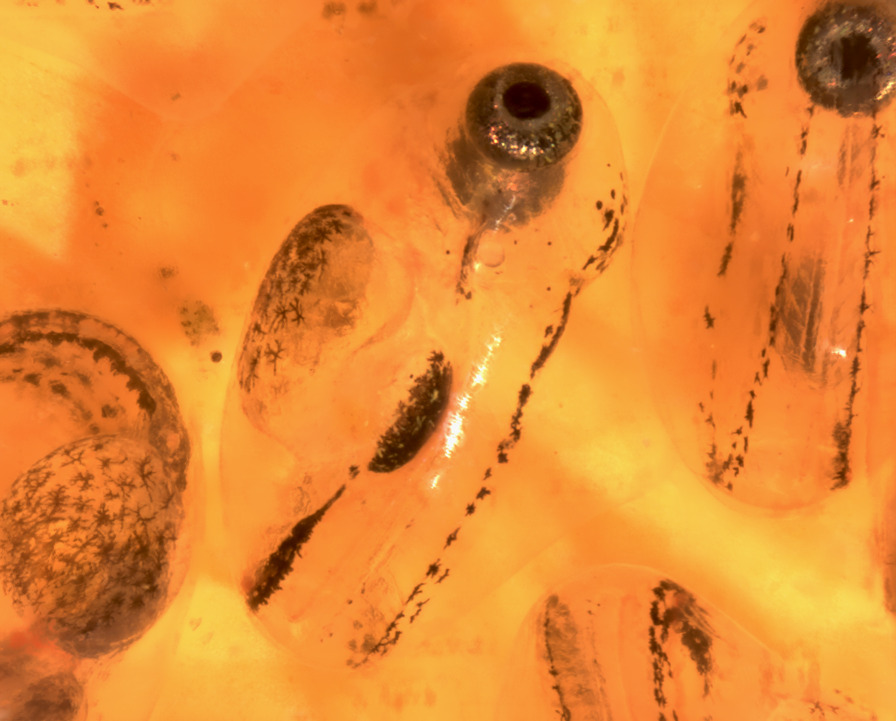
Our painted gobies have successfully reproduced! Take a sneak peek👀 at some tiny gobies about to hatch:
___________________________________________________________________________________
April 2022
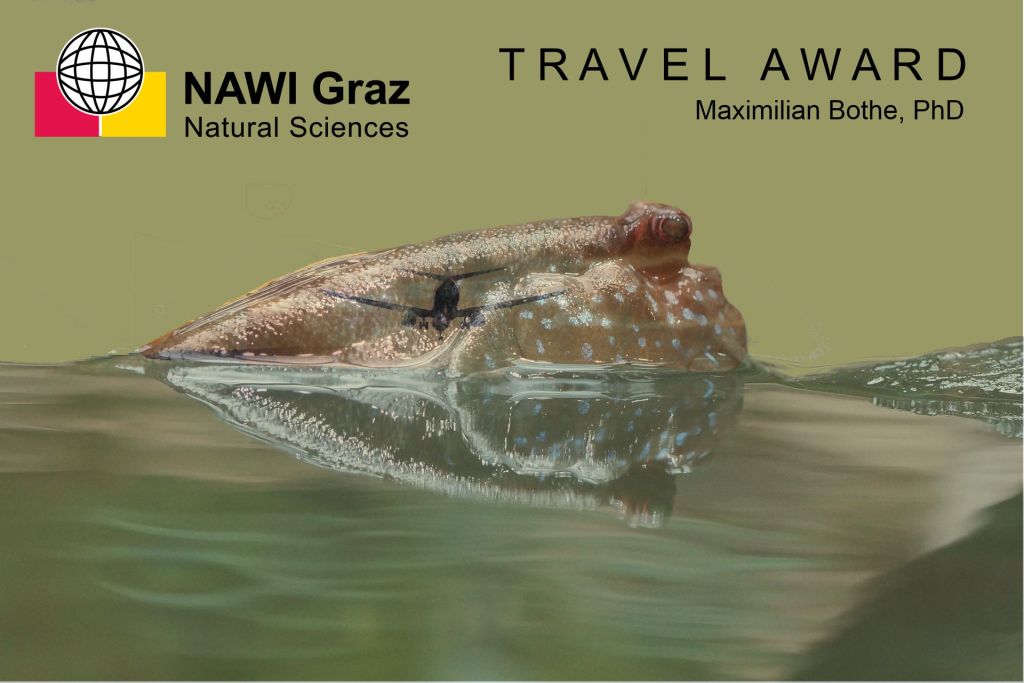
We are very happy for our post-doc, Maximilian Bothe, who was awarded one of the prestigious NAWI Graz travel awards for postdoctoral fellows. He will visit Cornell University to investigate neuronal networks of mudskippers. Congratulations!
___________________________________________________________________________________
March 2022
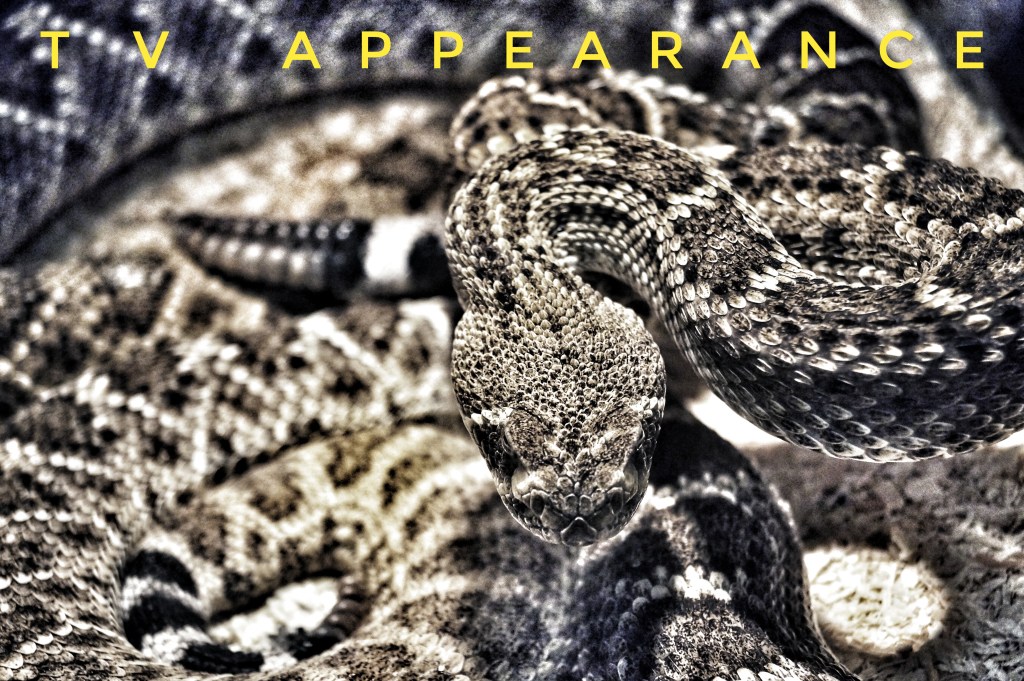
Our study on how the rattlesnake acoustic display fools humans into believing they are closer to the snake than they really are made it to the quiz show “Wer weiss den sowas?” on german television!
The episode is not online, but you can see a video feature explain the answer to the question here (only in german):
______________________________________________________________________________________
Dezember 2021
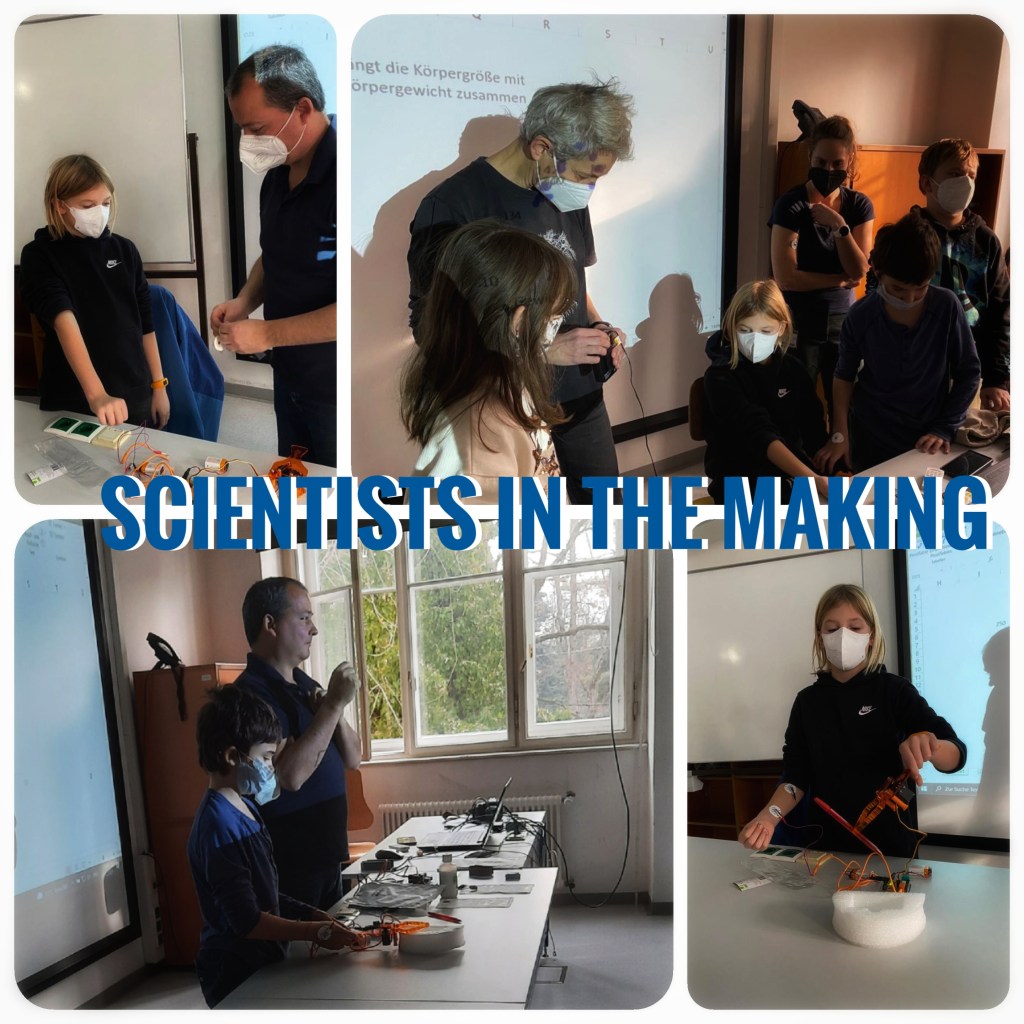
During the last week before the holidays, about twenty curious minds from the primary school VS St Veit paid a one-day visit to the neurons and behavior lab. As the potential future scientists investigated their maximum muscle force, they learned about different factors that can affect this force, controlled each other’s hands with their minds and discovered the great diversity of animals in our fish facilities. What a nice way to end a lab year! 🎇
______________________________________________________________________________________
November 2021
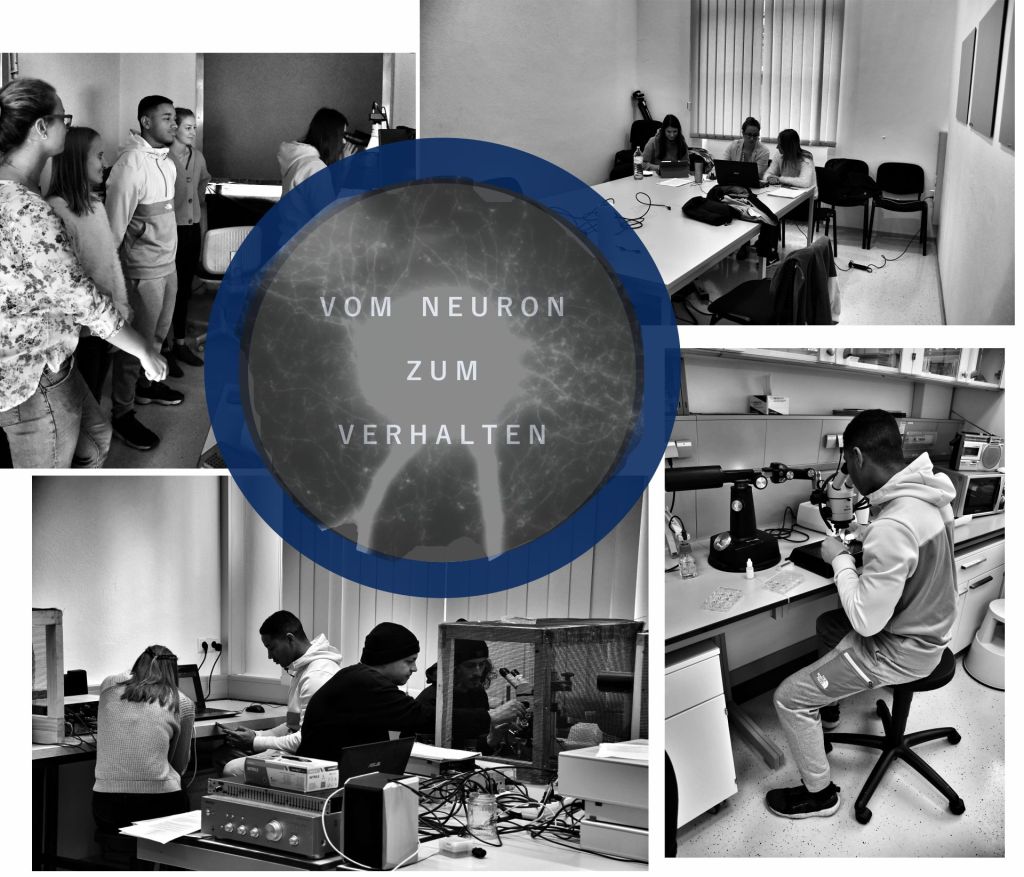
Oktober | November 2021
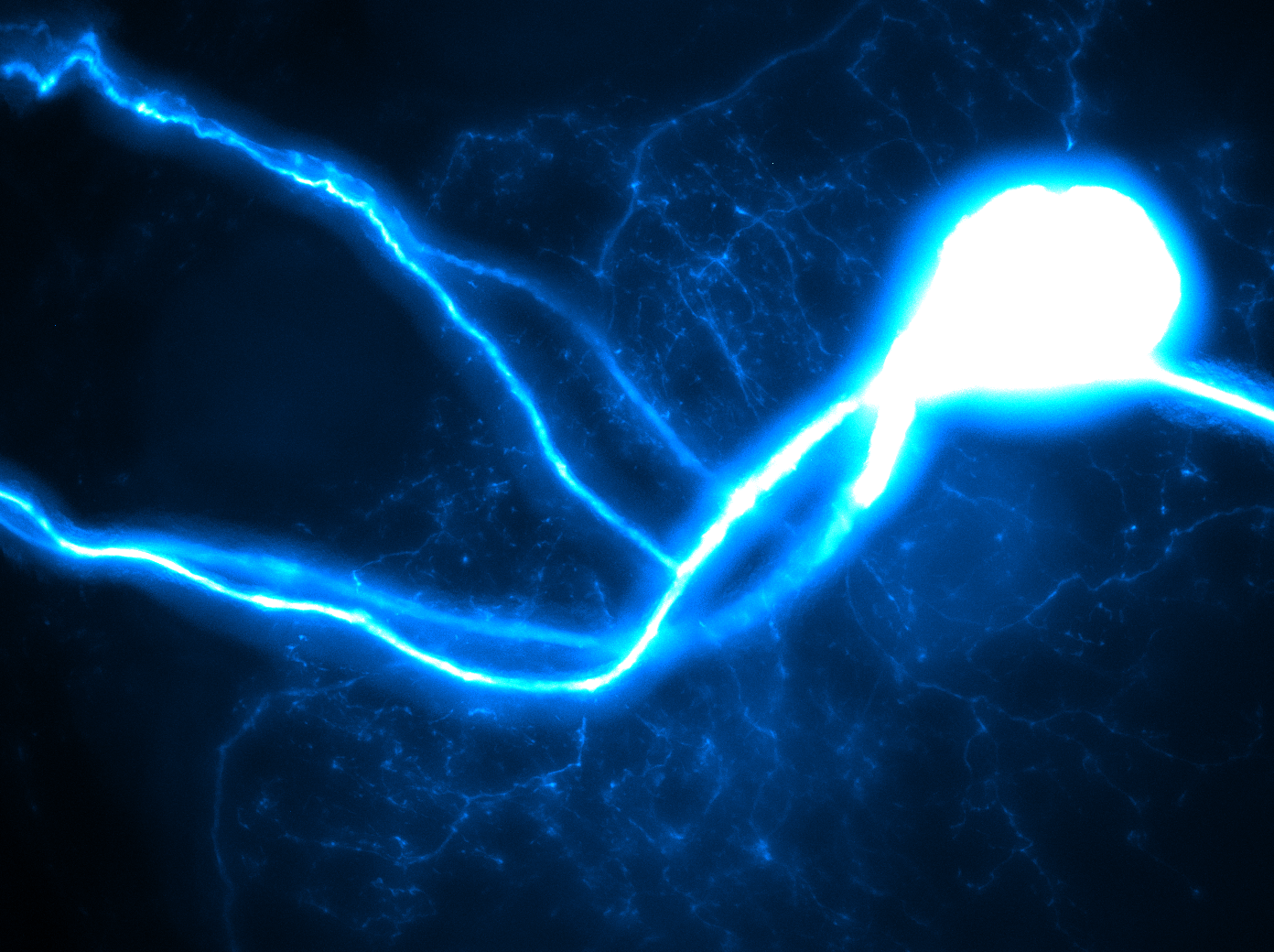
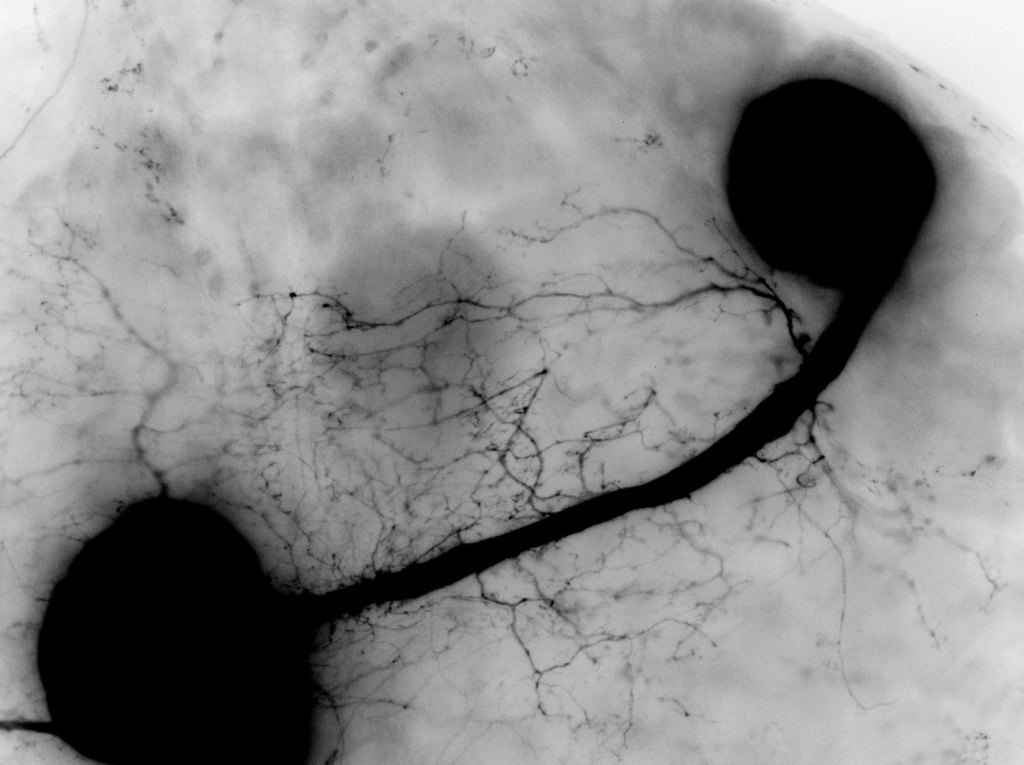
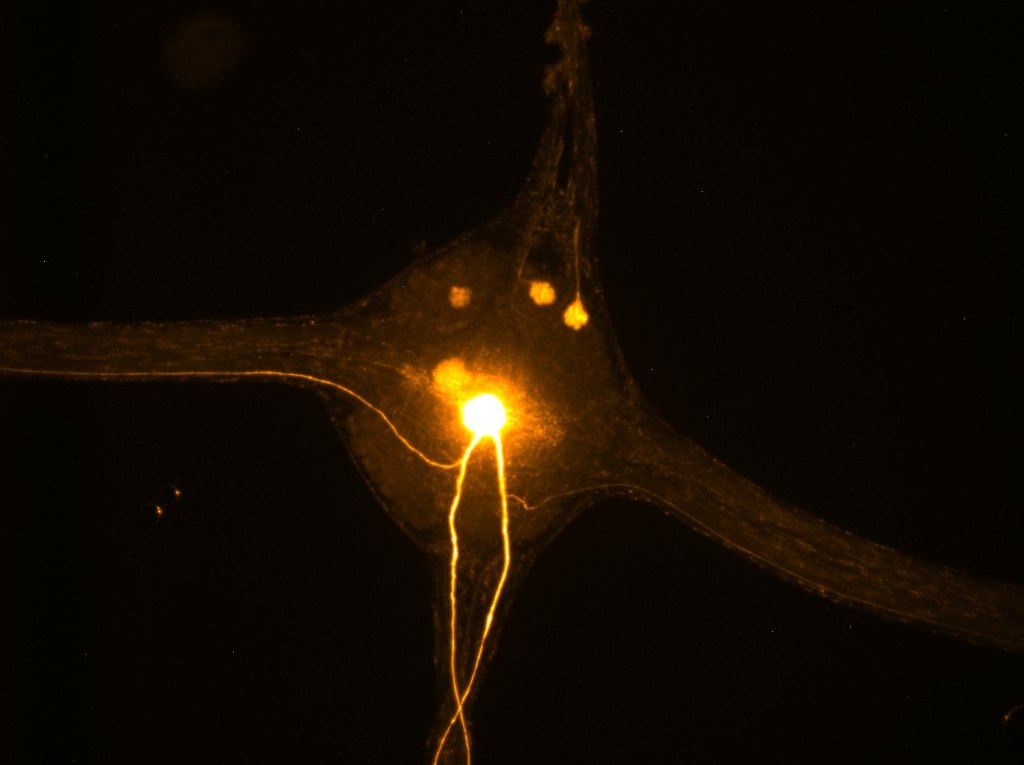
And it’s a wrap! The last two weeks were all about teaching. 13 students participated in our brand new lab course “from neurons to behavior”. Each week, three groups of two to three students were working on mini-projects that revolved around the remarkable nervous system of the leech. For a proper introduction, students had a short brush with the literature of their respective mini-projects. During this truly all-round course, students were introduced to a leech preparation, were able to do double recordings from two neighboring Retzius cells, conducted potassium channel pharmacology and performed intracellular fillings with neurobiotin, developed with a streptavidin reaction.Students analyzed their recorded data and embedded it into the scientific background of the mini-project fields. Every project week was successfully rounded off with a presentation of the project results and possible interpretations, which left room for an open and interactive discussion. Here is a slideshow with some pictures giving a sneak peek of the neurons labelled these two great weeks (more impressions coming soon…)

______________________________________________________________________________________
September 2021
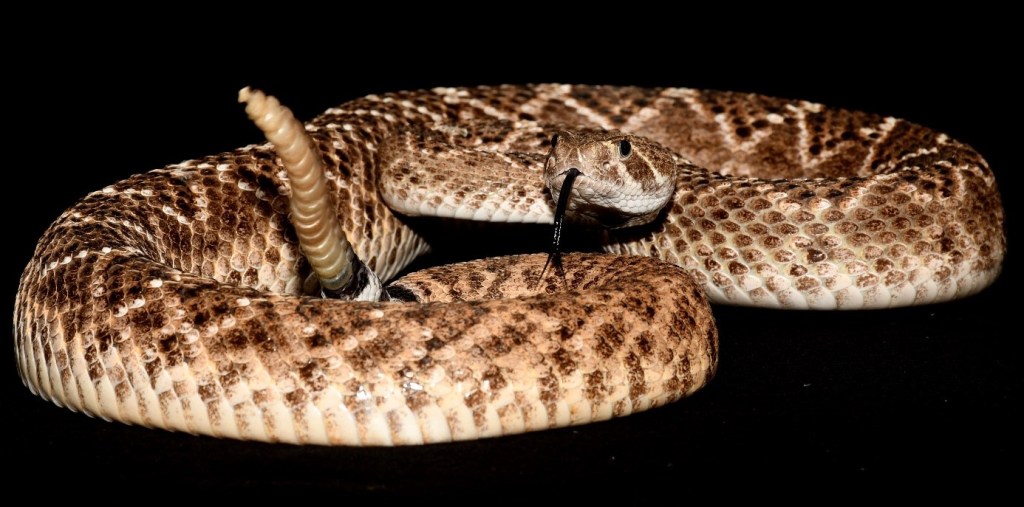
Is the rattlesnake rattling a simple notification of a snake’s presence or is it an elegant interspecies communication system that fools the auditory perception?
Find out in our new study using looming stimuli and acoustical psychophysics in combination with virtual reality, which was published in Current Biology. The press really liked that one! Check out our video abstract in the media section.
📄Find the complete paper here: https://doi.org/10.1016/j.cub.2021.07.018
_____________________________________________________________________________________________
April 2021
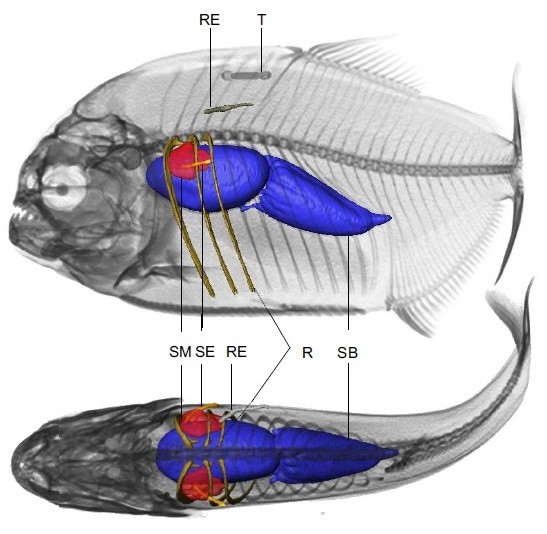
Piranhas produce acoustic social communication signals (sounds) with a muscle attached to the swim bladder.
We investigated the activity pattern of the spinal circuit controlling this acoustic communication system and compared it to the locomotor patterns recorded at the same spinal level. If you want to know more about the evolution of sonic systems from locomotor systems read our new paper in the Journal of Experimental Biology.
📄Find the complete paper here: https://doi.org/10.1242/jeb.242336
_____________________________________________________________________________________________
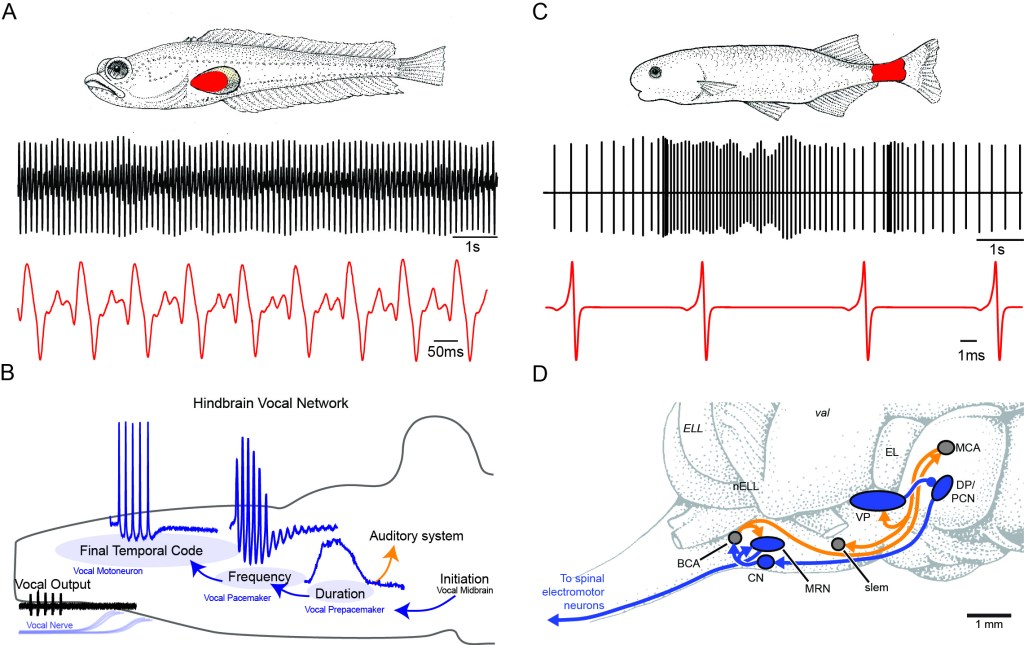
What are the similarities between vocal and electric behavior in fishes?
Find out in our review in Frontiers in Neural Circuits.
In a collaboration with colleagues from three different US universities, we published a review compiling some of the ground-breaking papers of the last 15 years, dealing with the study of vocal and electric fish with a special emphasis on how neural modulators can modify and control behavior.
If you want to find out more on how these modulators influence fish behavior, have a look at the review in the link below.
📄Find the complete paper here: https://doi.org/10.3389/fncir.2021.713105
_____________________________________________________________________________________________
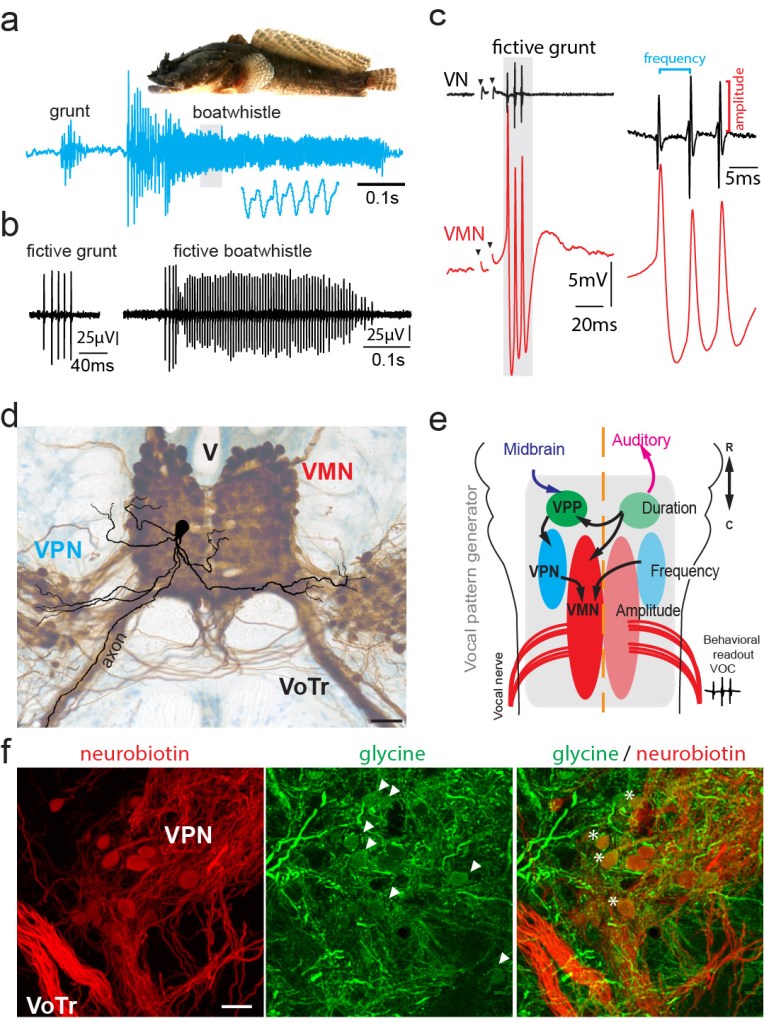
How do glycine and gap junctions contribute to call precision – find out in our new paper in eLife
In this paper we show that gap junctional coupling is necessary to activate a subset of glycinergic neurons in the toadfish vocal system. These neurons are essential for the high levels of synchrony needed in this system.
📄Find the complete paper here: https://elifesciences.org/articles/59390
_____________________________________________________________________________________________
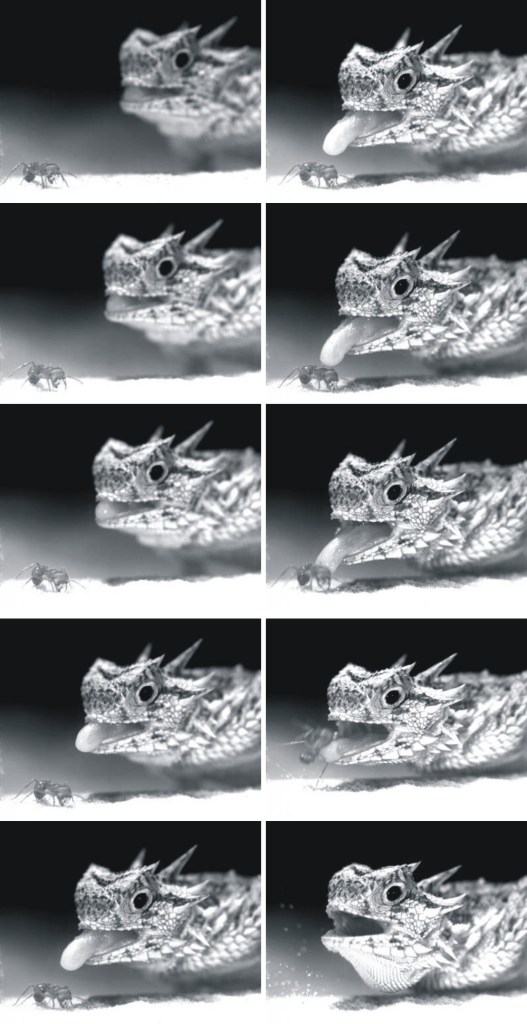
How do you deal with dangerous prey – learn a lesson from texas horned lizards
In a collaboration with US and german scientists we investigated how texas horned lizards prevent beeing biten or stung by the dangerous harvester ants. Check out the videos on the video page.
Avoiding being stung or bitten – prey capture behaviors of the ant-eating Texas horned lizard (Phrynosoma cornutum).Biol Open (2021) 10 (3): bio058453.
📄Find the complete paper here: https://doi.org/10.1242/bio.058453
_____________________________________________________________________________________________
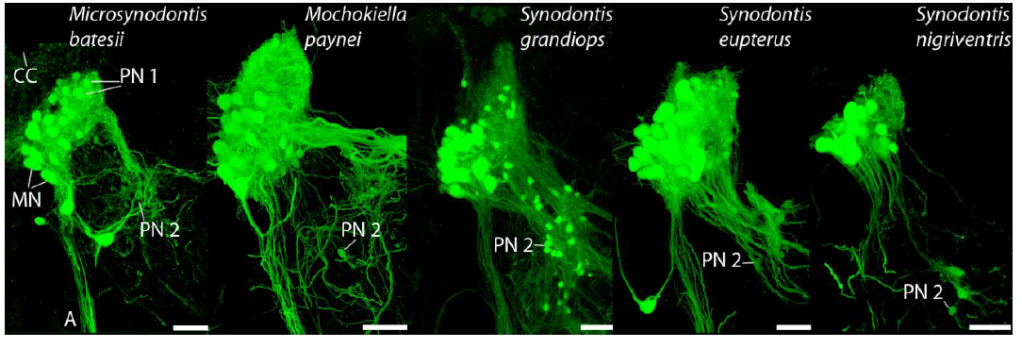
What happens if you use an existing neural network for a novel behavior? Find out in our new catfish collaborative study
In this study we investigated how different mochokid catfishes adapted their neural and peripheral components to produce different behaviors (sonic and electric signalling). The similarity of these neural networks shows how few changes can change the communication of these fishes.
Morphological diversity of acoustic and electric communication systems of mochokid catfish im Journal of Comparative neurology.
📄Find the complete paper here: https://doi.org/10.1002/cne.25057
_____________________________________________________________________________________________
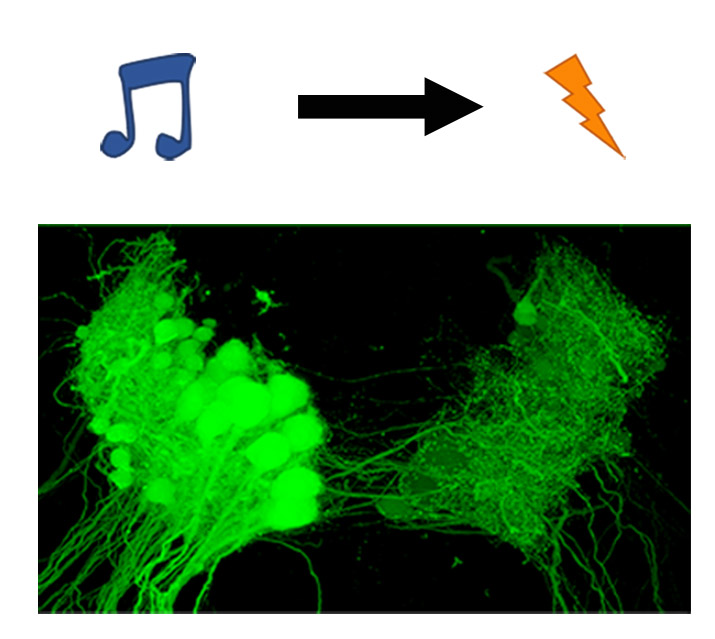
To what extent do modifications in the nervous system and peripheral effectors contribute to novel behaviors?
In collaboration with scientists at Cornell University and the University of Liège, we investigated this question in fishes that transitioned from acoustic to electrical communication.
📄Find the complete paper here: https://onlinelibrary.wiley.com/doi/10.1002/cne.24920
_____________________________________________________________________________________________
How does Serotonin distribution differ in different fishes – find out in our new paper
Serotonin is a major player in modulating behavioral patterns. In this paper we explore the distribution of serotonergic cells in the brains of three socially communicating fishes.
📄Find the complete paper here: https://doi.org/10.1016/j.jchemneu.2019.101708
 Neurons and behavior